The concert staged by the British colony on January 7 turned out "beautiful and brilliant" and the audience "numerous and distinguished" (ECG. January 9, 1911, page 1).
Miss Mason and misters Robson, Massey and Moffat sang "deliciously".
Miss Mason at the piano and the boy Sampablo del Villar on the violin played select pieces.
The function concluded with the orchestra playing the Marcha Real, everyone standing; subsequently Miss Mason played and the auditorium sang the British anthem.
The New England presented another zarzuela company, Cristóbal y Orozco, on Thursday January 12 (ECG. January 13, 1911, page 2).
The debut was a "brilliant success" and despite the disagreeable weather a "numerous and distinguished crowd went to the pavilion" to watch the Spanish version of Leo Fall's operetta, Die Dollarprinzessin ("The Dollar Princess").
The winter storms of reference started blowing in the afternoon of January 13.
"The state of the sea in the bay was awesome, like few timesseen before" (ECG. January 14, 1911, page 2).
A barge loaded with forty tons of coal plunged to the bottom and the two mariners on it were "miraculously rescued."
A fishing vessel broke its moorings, battered another and nearly struck a corvette.
The ferries Amboage and Ferrolano cancelled their service.
Another steamship out on the open sea had to return to port; a chimney got blown down; peasant women from the seaside hamlet of Cobas [14 kilometers away] said that the ocean had a "terrifying aspect" and the "giant waves" swept far onshore.
Nevertheless a "numerous" crowd went to the New England that very night.
On Sunday January 15 an "enormous throng of spectators" gathered.
On the 17th "almost every armchair was filled."
The two sessions of the 19th were "great artistic and financial successes."
Saturday 21 and Sunday 22 had "chock-full houses."
The zarzuela company of Cristóbal y Orozco closed its gig before a "large assembly of customers" on Thursday January 26 (ECG. January 27, 1911, page 2).
The second troupe booked by the New England arrived to the city in the afternoon of February 7. It was Montijano's comic-dramatic company, back for a third year (see 1907 and 1908). Its third debut took place at 9:30 PM on Thursday February 9.
Ticket prices were 1.50 Pesetas for a padded seat with armrest, 0.85 Pesetas for a seat on the first row of benches, 0.65 Pesetas for benches farther back, 0.55 Pesetas for general admission. The municipal entertainment tax was charged to the customer and the theater added a novel 5% surcharge "earmarked for panhandlers" (ECG. February 8, 1911, page 2).
The attendance of February 9 was "numerous" with almost all tickets sold.
The attendance figures rose on the 10th, but the newspaper made an ill-boding plea to the "zealous local-police chief" to forestall the gathering of beggars in the vicinity of the New England box office. "The beggars harass everyone who goes to the box office and in truth the spectators already pay a tax to relieve those unfortunates, hence their cadging must be averted for it also sullies a people's culture" (ECG. February 11, 1911, page 2).
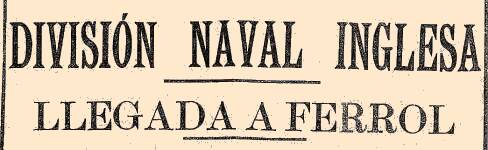
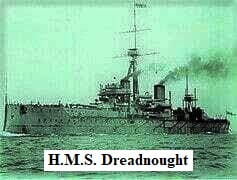
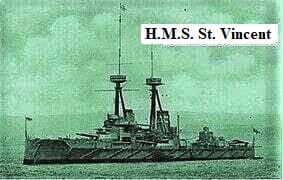
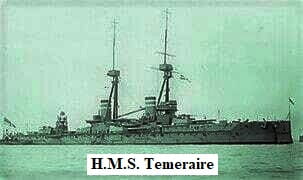
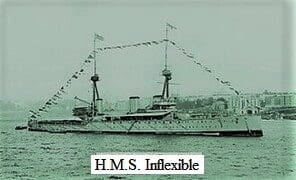
At this time the city was looking forward to and preparing for the arrival of a division of the Royal Navy, seven warships and 4,990 crew.
The festive events planned to honour the British admiral, commanders and officers included a special lunch in the Arsenal on Sunday regaled with the singing of the folklore ensemble, Airiños d'a miña terra (see 1906), a formal ball and banquet in Teatro Jofre on Monday, a special afternoon tea followed by dancing at Navy Headquarters on Tuesday where "many families of the elegant Ferrolian society" were expected to attend, military bands to play in honour of the British mariners, a gala function at the New England, the installation of several "voltaic arches" on the landing dock to be kept lighted during the Royal Navy Division's stay in the harbour (ECG. February 8, 1911, page 2).
Note: The newspaper misjudged the dates; things happened a day earlier (End of Note).
The battle group arrived on Saturday February 11 as expected, under the command of Admiral Sir William H. May.
The streets of Ferrol were full of locals and out-of-towners who wanted to see or visit the British vessels.
Upon arrival the admiral was complimented by top civilian and military authorities. Eight hundred sailors came ashore on leave, no unpleasant incidents recorded. Many bars and cafés swarmed with people, British sailors consumed a lot of wine and beer. Local police arrested several children for pestering the Britons, begging them for cash and tobacco.
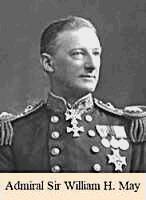
On Saturday a sumptuous banquet was held at 8:00 PM in a very spacious salon of the Sociedad Española de Construcción Naval quarters.
Red carpet draped the granite staircase. At the first landing and on the wall facing the entrance to the banquet room, white characters on a red banner spelled out, "May, We Welcome You," an "affectionate salute to the courageous British crews in the dignity of their illustrated and chivalrous Admiral" (ECG. February 13, 1911, page 2).
Seven monumental arches on the upper floor sparkled with strips of coloured electric bulbs. Every country's flag and signals covered the walls of the banquet chamber throbbing with bouquets, tree branch décor, art, light and life.
The dining table was exceedingly long and straight except for a section of boards arranged as uppercase M, A, Y letters. Silk ribbons bearing the colours of the British and Spanish ensigns ran down the center of the table. Tablecloths and broadloom were immaculately white.
Entrées: oysters, entremets, consommé.
Main course: fish in Turkish sauce, partridge meat, asparagus, ham, truffled turkey.
Desserts: ice cream, pastries and coffee.
Beverages: Riscal, Sauternes, dry sweet sherry, champagne and liqueurs.
Optional: choice of tobaccos.
The chorale Airiños d'a miña terra (see November 17, 1906) performed the following numbers,
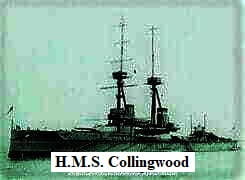
On the same day the British colony put on a "variety concert" at 7:30 PM in Teatro Jofre. Seven hundred and fifty sailors attended, some Spaniards did also. The variety show, delivered entirely in English, ended a little before 10:00 PM. The captain of H.M.S. Collingwood thanked the British colony for its deference.
On Sunday a hundred and fifty sailors of the Catholic faith attended Mass in the military temple of San Francisco. Two brigades of the evangelical faith went to the evangelical temple on Iglesia Street.
That same day a banquet for twenty-eight lower ranks, fourteen Spaniards and fourteen Britons, was celebrated aboard a Spanish cruiser. Spanish chief petty officer first class, Nicolás Patiño, sat at the head of the table. The menu of this banquet was: Entrées: entremets. Main dishes: Paella valenciana, sirloin à l'espagnole, dariole moulds of legumes, lobster, roast beef. Desserts: Cheeses, pudding, fruits, pastries. Beverages: Rioja, sherry, champagne, liqueurs, coffee and tea. Optional: cigars.
On the same day the British colony staged possibly the same "variety concert" in Teatro Romea; many British mariners attended.
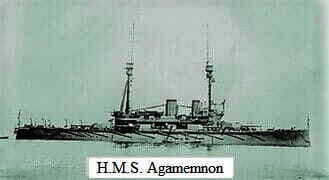
Two Agamemnon sailors jumped ship on Monday 14.
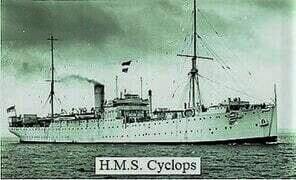
That same day the depot ship Cyclops left port at 4:00 PM bound for Portland. "This vessel always departs ahead of the rest because its sailing speed is slower" (ECG. February 15, 1911, page 2).
On the same day the New England staged a function at 9:30 PM in honour of the British mariners. A "numerous public" and many British sailors attended (ECG. February 15, 1911, page 2).
The police inspector urged the owner of the New England to implement the provincial government's ban on smoking at entertainment venues and to solicit the help of the policemen who frequented the theater should he require it (ECG. February 13, 1911, page 2).
Many people gathered in the harbour to watch the departure of the six remaining warships at 4:20 PM on Tuesday 15.
From the 16th to the 24th every function of Montijano's comic-dramatic company at the New England drew a sizeable audience. Three sessions tallied poor attendance figures because the play had been staged too often or because the weather was too rough.
Another untoward incident (see March 13, 1907) occurred over the February 25-26 weekend. During the intermission between the third and fourth act of the evening function a certain section of the public demanded the orchestra play La Marsellaise. The musicians declined and the demandants protested loudly. To avert a serious disturbance the conductor of the orchestra sat down at the piano and played the revolutionary song with the Governor's leave.
Montijano's comic-dramatic company said good-bye on Saturday March 4; the newspaper did not cover the event.
The zarzuela company of Cristóbal y Orozco returned to the New England on April 15 and so did the "usual" favourable attendance figures. The newspaper reported daily and generously on their performances.
The company of Cristóbal y Orozco said good-bye on Saturday May 27; the newspaper did not cover the event. However the attendance figures from April 15 to May 27 were good to excellent with only two or three exceptions.
On Saturday August 5 the New England finally opened its cinematograph season after a long break.
On Saturday August 12 the pavilion advertised its willingness to "spare no expense" in order to delight "its habitual patrons" with the most recent cinematographs. These included that day's "precious" feature-length reel entitled, The Coronation of King George V (ECG. August 12, 1911, pages 1-2).
However the "precious reel" was no scoop; Teatro Romea had shown it already on July 16.
The cinematograph season ended on Sunday September 17.
Montijano's comic-dramatic company returned on Saturday September 23. Montijano's second gig of the year drew a full house. The New England garnered hit after hit like in the good old days, eclipsing Teatro Jofre and Teatro Romea.
A good measure of the popularity enjoyed by Montijano's company in Ferrol is the agglomeration of customers outdoors and the applause which the artists reap with every show indoors.(El Correo Gallego. October 2, 1911, page 1)
On Friday October 13 the Ferrolian child prodigy Pepito Arriola (1896-1954) arrived in the city around 6:00 PM. More than two thousand people greeted him by the old city gate in spite of the drizzle.
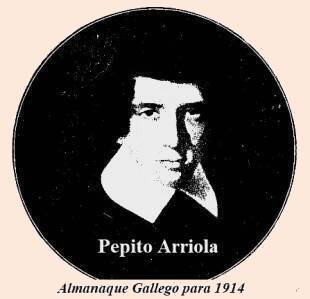
The newspaper interviewed the boy and his mother.
"What impression did Ferrol's reception give you?""Unforgettable. I loved this town because I heard my mother speak of it with great affection, and upon experiencing its hearty welcome I believe I love it as much as my mother does, which is the most I can say."
We talked to his mother while the boy played with his pet dog.
"My stay must be short," she told us, "because we are bound by compulsory contracts abroad. We came to Ferrol to manifest our affection towards it and to give a benefit concert in favour of the defenseless.
"You mentioned that Pepito seems to be good and intelligent," she continued. "He is very good, he has a heart of gold, as people say. When we were in the United States he made the acquaintance of two poor children who had an excellent aptitude for music. One day he pleaded with me for us to protect them... From that day Pepito underwrites their expenses, one is in Budapest and the other in Berlin."
Mrs. Arriola told us that they would be travelling to the United States very soon and that the dog, named Yeah, would stay behind in Ferrol in the care of Arriola's father.
(El Correo Gallego. October 14, 1911, page 2)
Pepito Arriola gave two concerts in Teatro Jofre, one on Saturday and one on Sunday.
The New England devoted Monday's regular evening function to him. The small theater erected a "handsome balcony" and when he made his appearance the whole "very distinguished auditorium" stood up and "acclaimed the precocious artist" (ECG. October 17, 1911, page 2).
Pepito Arriola left Ferrol by automobile on Tuesday October 17 at 8:45 AM.
Montijano's second gig of the year ended on Sunday October 22; the newspaper did not cover the event.
The New England restarted cinematograph sessions on Saturday November 4 and carried them through to year's end.
On December 17 the New England invited the children of the municipal hospice to a session. As the children exited the premises a worker was seen handing out cookies to them (ECG. December 18, 1911, page 2).
On Christmas Day the pavilion advertised a "monster" program "such as has not been seen to date in Ferrol"; it was a string of seventeen cinematographs.
The British colony inaugurated its own school at 8:00 PM on Thursday November 2, 1911.
The British companies engaged in the construction of the new Arsenal built the new school in less than three months.
At this time the British colony was estimated to number 1,000 persons (La Correspondencia Gallega. September 11, 1911, page 2).
The location of the school is unbeatable, airy, plenty of sunlight and greenery. The broad fields around the site may in good weather be used for leisure, sport or as a schoolyard during recess.The institution covers an area of two hundred square meters and is one storey tall, built of brick, cement, wood and iron; flat shingles cover the roof. The walls have large windows on every side and are covered with maps and posters of animals. There are four doorways.
The school employs a range of ventilators. The washrooms are modern and have abundant water at their disposal.
Girls and boys study in separate classrooms which are heated in winter. The desks are long, have under-the-table trays and seat four students each.
The total budget for the construction and completion of the school was twenty thousand Pesetas.
(El Correo Gallego. November 3, 1911, page 2)