New England began the new year showing cinematographs.
The only movie from Saturday January 6 extant in Youtube is Aeroplano Santos Dumont.
The following morning all the employees of Ferrol's theaters held a meeting at the New England to discuss ways of helping José Camos, a fellow worker seriously ill and penniless. Camos was a member of the pavilion's stage crew. The meeting decided on a charity festival as the best option and the New England ceded the premises temporarily for that purpose.
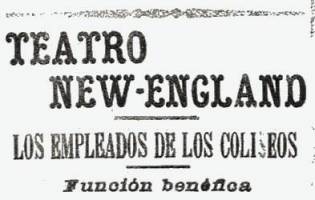
Camos died at 4:00 PM on January 10, unbeknown to all the employees of Ferrol's "coliseums" (advertisement on the right) who had gathered at the New England on January 7. By coincidence the employees convened a second meeting four hours after Camos' death and upon being told the sad news about their colleague's passing decided to stick to the original plan with the proviso that the festival's proceeds would now go to comfort the dead man's mother who was also ill and penniless.
The festival went ahead on Saturday January 13 at 9:00 PM. It consisted of three parts.
The first part comprised four acts: a symphony played by the theater's sextet, two "precious movies," two songs and the monologue, "What I am going to be," recited by a child member of the Red Cross.
The second part consisted of five acts, similar in structure to the first part but performed by new artists. The surplus fifth act was a one-act operetta.
The third part of the festival had three acts: symphony, batch of movies and a performance of the popular chorale, Airiños d'a miña terra.
The festival admission tickets were 1 Peseta for a padded seat with armrest, 0.60 Pesetas for a seat on the first row of benches, 0.50 Pesetas for the benches behind, 0.35 Pesetas for general admission; all taxes borne by the customer.
"Well-informed persons have told us that many seats in the armchair section were reserved as of Thursday and that merely eight or ten benches were still available today as well as very few general admission tickets" (ECG. January 13, 1912, page 2).
The festival was a complete sellout. The theater was so "completely crowded" that it was necessary to add more armchairs. Every social class was represented in the auditorium.
The festival finished at 1:00 AM and the net revenue "to be handed over to Camos' family today" was 608.45 Pesetas (ECG. January 15, 1912, page 2).
On February 6 the New England hosted a "most brilliant Galician fiesta" at 9:30 PM. The event brought together two famous regional chorales, Pontevedra's Aires d'a terra and Ferrol's Airiños d'a miña terra.
"Almost all seats are already taken and the little theater on Iglesia Street will be too small for the enormous crowd expected" (ECG. February 6, 1912, page 2).
The newspaper's prediction was correct, "the small theater was full of people perhaps as never before... The public drowned out the final notes of bagpipe and choir with its thunderous ovations and ceaseless rhythmic clapping."
The Pontevedrese chorale sang Foliada de Ribeira, Alalá de Pontevedra, Alalá de Ourense, Foliada de montaña.
The Ferrolian chorale interpreted Lonxe da terriña. A lone member of the chorale delivered Un adios a Mariquiña and Tangaraños.
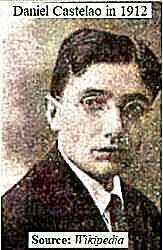
Daniel Castelao (photograph on the left) was present that memorable night.
The "genial artist" was "applauded to the hilt" for his improvised caricatures of the royal family and other people including some members of the chorale (ECG. February 7, 1912, pages 2-3).
The New England ceded another charity function for the February 24-25 weekend to help an unemployed family of acrobats who wished to try their luck somewhere else but lacked the money to fulfill their wish.
The family organized two cinematograph/varietés sessions. The tickets cost 0.75 Pesetas for a padded seat with armrest, 0.40 Pesetas for a seat on the first row of benches, 0.30 Pesetas for the benches behind, 0.20 Pesetas for general admission. Children and military rank and file paid half price.
"Despite the offer of many social dances and other attractions roundabout typical of the celebration of Carnival the theater filled to capacity both days" (ECG. February 26, 1912, page 2).
The family asked the newspaper to relay their thanks to everyone who had helped out, to the New England Company and to its treasurer, Cesáreo Rodríguez.
One of the eight cinematographs shown on Sunday March 17 was Vista de Pekín (View of Peking).
On Saturday April 6, right near the end of Holy Week 1912, New England presented Bellver's company of zarzuela (ECG. April 6, 1912, page 2).
The initial Saturday and Sunday functions were sellouts, "not a single seat was left empty" (ECG. April 8, 1912, page 2).
The attendance stayed "very numerous" on the following weekdays.
The pavilion continued raking in dough: two full houses on Sunday April 14, even on weekdays attendance figures remained high.
"Yesterday, as every day, a very large number of customers gathered in the pretty theater on Sagasta Street"; the theater was "invaded by a very distinguished public" for every session (ECG. April 17, 1912, page 2).
Note: Perhaps a stretch of Iglesia Street had been renamed Sagasta officially, but such arbitrary name changes never stuck for long (End of Note).
"A very numerous public" (April 22).
"As usual the public attending the various sessions of the little theater on Sagasta Street was very numerous" (April 25).
"A very numerous public attended yesterday's sessions" (April 29).
The pavilion kept registering throng after throng of patrons.
"The theater was full de bout en bout yesterday in all the sessions" (ECG. May 11, 1912, page 2).
"It seems superfluous to us to report that a select and very numerous public invaded the theater on Sagasta Street yesterday to watch all its sessions" (May 13).
And so on and so forth.
Throughout the Bellver engagement Teatro Jofre and Teatro Romea limited themselves to movie shows primarily. The newspaper's spotlight all this time was on the live performances at the New England. The other two venues were completely eclipsed.
Bellver's company said good-bye on Monday May 27 and the pavilion's first zarzuela season ended.
The little theater closed its doors to the public for about a month and a half.
The New England pavilion reopened on Sunday July 14 with "the debut of a new and marvelous cinematograph projector, the most stable, the most perfected and the most up-to-date of its class today" (ECG. July 13, 1912, page 2).
The movie session times were the usual ones, 4:00, 5:00, 7:00, 9:00 and 10:00 PM, and so were the prices—a sure sign of financial health.
Monday's report praised the new projector and its cabin of "galvanized iron more than two millimeters thick, internal coat of asbestus, cooled by two regular fans plus an extractor expelling air outdoors through a vent in the ceiling" (ECG. July 15, 1912, page 2).
"We understand that Mr. Tenreiro the theater owner plans to make improvements to the locale which will surely delight the public."
Occasionally the New England interspersed short-lived varietés, as Teatro Jofre and Teatro Romea had done during the New England's engagement of the Bellver Operetta Company.
Mr. Juliano Salcedo the "champion of Spanish ventriloquists" and his daughter Julita Salcedo, "a very noteworthy musician who enjoys sensational success, an outstanding artist in her genre," performed from Saturday August 3 to Sunday 11.
A troupe of gymnasts bearing the name, "Hermanos Wernoff," performed from Thursday September 12 to Sunday 15.
The "extraordinary festival" of Saturday September 21 drew a packed auditorium (ECG. September 23, 1912, page 2). The cinematograph session of 10:00 PM incorporated a live performance by the Ferrolian chorale, Airiños d'a miña terra. The films had been requested by telegraph. Apparently they were feature-length, "splendidly" diverse, "extraordinarily" up-to-date and as beautiful as anyone could ask for. Moreover the pavilion's screen and projector rendered the moving images "extremely sharp."
Over the October 12 weekend the New England pavilion hosted Les Cuno Alexandre.
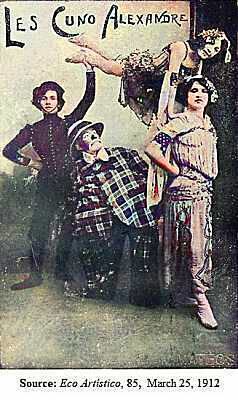
This was another varieté act which filled the theater to capacity and left the patrons "very satisfied."
Les Cuno Alexandre were an Italian team of female acrobats. They performed together with a clown as a sidekick.
One of the gymnasts whose stage name was "La Bella Emilia" (she is probably the woman in front on the photograph to the left) sang solo in a separate act.
The last day of performances by Les Cuno Alexandre was Sunday October 20.
Bellver's company returned to the New England on Saturday October 26. The public reacted with the same enthusiasm it had shown throughout the company's initial gig: full or nearly full houses on most weekends and a "numerous affluence of public" on most weekdays.
Several of Bellver's representations were reprises of the first gig—albeit with different artists—but this did not depress attendance figures. Thus Molinos de viento (May 6) was repeated on Saturday November 16, yet the newspaper reported full houses in every session (ECG. November 18, 1912, page 1).
On November 21 the newspaper carried a plea by the habitual patrons of the theater to the mayor and to the municipal works department to please patch up Sagasta Street. "The pavement has turned into an impassable mud pit," and they volunteered, "some carts of gravel and crushed coal would solve the problem" (page 2).
On December 24 Bellver staged what was "perhaps the hit of the season, a veritable artistic exploit" (ECG. December 24, 1912, page 2),
La Generala (The Female General)
Bellver's company stayed to year's end.
On Sunday March 31 a local policeman briefed his superiors about several children who had hurled stones at the female doorkeeper of the British School, injuring her on the head (ECG. April 1, 1912, page 1).
On Wednesday April 10 the British School pupils put on a show in Teatro Romea organized by their principal, Mr. Oliver Watkins. The "beautiful and pleasant festival of the British children" started at 8:00 PM.
The audience was composed of members of the British colony and members of Ferrolian society.
"The theater looked gorgeous... The festival, split in two parts, turned out to be very entertaining" (ECG. April 11, 1912, page 2).
A segment of the British colony returned to the New England for a May 6 festival dedicated to the local Press Association.
"The New England will look gorgeous and imposing today, full of distinguished ladies and pretty misses, spirited military men, significant civilian personalities and a hefty representation of the modest and honourable social classes" (ECG. May 6, 1912, page 1).
The program of this Press Association festival was the following,
El Correo Gallego number of May 7 devoted two and a half front page columns to describe and extol the Press Association festival night.
That same day the Association invited representatives of the pavilion and lead actors and actresses of the Bellver Operetta Company to a two-hour lunch at Hotel Suizo (Swiss Hotel) as a token of appreciation and gratitude for having hosted said festival (ECG. May 8, 1912, page 1).
On May 27 Mr. Robert Hide, a machinist with one of the Arsenal's dredges, died suddenly in his home at 3:00 PM. He was sixty years old, a widower. He left behind two sons in England and a young woman who kept him company.
His corpse was driven to the cemetery on Tuesday at 6:00 PM. The entire British colony accompanying the casket. He was buried on the "Dissidents Sector" of the graveyard (ECG. May 29, 1912, page 2).
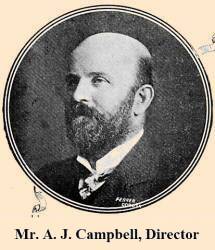
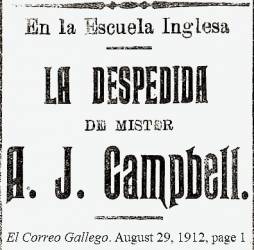
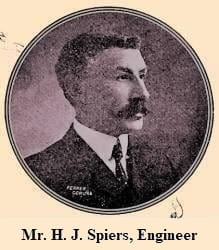
The Board of the British School convened a meeting of teachers, pupils and invited "distinguished members" of the colony for the afternoon of Tuesday August 27. The meeting was presided by "the illustrated engineer Mr. Spiers." On his right sat Mr. and Mrs. Campbell and Mr. Muir. On his left sat Mr. Prechous, Mr. Orr, and three members of the Board.
Mr. Spiers explained that the purpose of the meeting was to enable the pupils to express the respect and affection that Mr. and Mrs. Campbell had always shown toward them and to demonstrate their profound gratitude for the protection which the pair had afforded them.
The pupils then sang some pertinent songs.
Afterward Mr. Spiers invited Mr. Orr to say a few words. What follows is an abridgement of what he said,
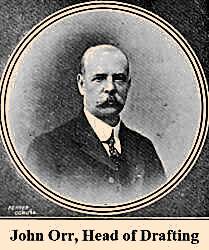
I have the honour of expressing on behalf of the School Board our gratitude and thanks to Mr Campbell and his distinguished spouse for their many acts of kindness toward us.Over the past eighteen months the School Board has frequently needed to consult them...After overcoming many hurdles we see ourselves in possession of this magnificent schoolhouse thanks to the protection of Mr and Mrs. Campbell.
Perhaps the children gathered here would like to know the object of this School Board, and in two words I can explain it: the British colony appointed us a year and a half ago solely to look out for the interests of the children. We meet once a month...and read with great interest the reports of Mr. Watkins, your teacher, regarding the progress being made by the pupils.
Mr. and Mrs. Campbell helped the school financially and showed interest not only in all the pupils but on every British child...at Christmas time not a single child was left out wherever the Christmas tree party was held...and now before he departs he has bequeathed this beautiful piano to the School.
Our unanimous wish is that he may enjoy a long life and the greatest happiness—he and his distinguished family—and may the new life he embarks upon bring him much prosperity.
(El Correo Gallego. August 29, 1912, page 1)
The next one to speak was Mr. Prechous. His remarkable speech deserves the full transcription that follows,
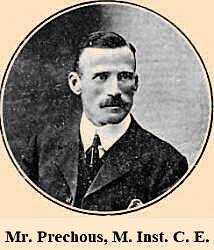
Ladies, gentlemen and children:This afternoon's convocation of Ferrol's British School pupils with the aim of bidding "good-bye" to Mr. Campbell and his wife on the occasion of their departure to Scotland is one of the dearer ideas conceived. At the same time nothing could be more appropriate since Mr. Campbell has, among all the members of the British colony, been one of the most enthusiastic proponents of educating these British children in a manner analogous to our country's school system.
It was he who stimulated "Club Victoria" to contribute with all the generosity its strength could muster to the collection of funds in pursuit of that goal, and it is thanks in large measure to his efforts that this beautiful building was built, whose construction enhanced the educational facilities and to which must be coupled the valuable stewardship of Mr. Watkins and Mrs. Mason.
Without any doubt the fact that Mr. Campbell is a married man with children led him to see the indispensable need of having the means in Ferrol to enable children to continue their education in a fashion analogous to the one they received in our country, with the object that should they wish to broaden their studies upon returning to their home country they would not be found lagging.
Mrs. Campbell too has always been the first one to organize and liberally sponsor meetings at this School. Those fun-filled "Christmas tree" parties, those tea times with pastries and many other fine events including some very clever games she was in the habit of concocting, all these must be remembered. Those get-togethers made the big children like us and the small children like you forget that we are absent from our dear country.
I am not going to extend myself a lot this afternoon except to address the children particularly, you children who are starting to live and who, like little lambs, ignore what awaits you in this life. In a few years you will depart school and start a life of struggle for your own welfare whatever your ambitions might be. I have used the word "struggle" because life is in our modern context a struggle for the man who must work to stay alive, not exactly a contest in the sense you children interpret the word (i.e., knock your schoolmate to the ground or he will) but a contest of brainpower.
When that time arrives you will do well to have engraved in your imaginations the name of some gentleman you have known, whom you want to emulate, whose example you wish to follow. Children, you who are acquainted with Mr. Campbell you will not find a better example than his, believe me, even if you searched everywhere across our country.
In the first place he is the genuine stripe of British Christian gentleman which is for us, as you all know, the best type of man the world devises. As a working man he is one of the most eminent naval architects of our country, and presently he leaves Ferrol to assume the management of one of the biggest Shipyards of Scotland in the metropolis where he started his studies, almost on the same street.
When you begin to ponder his accomplishment of that lovely career at his age, for he is still a young man, merely forty-six years old, who in only twenty-two years went from the drafting workshops to becoming the managing Director of one of the better shipyards, I believe you will understand what I mean when I tell you that you can not find a more inspiring example.
Of course not all of you can be Mr. Campbell, but all of you can use the same blueprint and strive to develop those same traits that served him so well. Then you will live at ease: your reward is sure. And on the question of whether those traits dispense happiness you need only look at Mr. and Mrs. Campbell.
I do not know what to say to you, small girls, I am a bachelor and I had no sister. Besides, I am more accustomed to dealing with men than with women. But all of you know Mrs. Campbell. Well then, you can do no better than to follow on her footsteps.
With these few words I have the honour of seconding what Mr. Spiers said regarding our sorrow in having to bid farewell to our friends, Mr. and Mrs. Campbell, while at the same time wishing them every sort of happiness in their new residence.
(Ibid., page 1)
Next Mr. Watkins the school principal spoke to thank Mr. and Mrs. Campbell.
A little girl presented Mr. Campbell with a decorative marquee as a a souvenir of the pupils' gratefulness.
Mr. Campbell spoke last; he thanked his audience and advised the children to study hard.
When he finished his delivery all the children acclaimed him and his wife.
Next everyone sang the British national anthem.
As the children filed out of the schoolhouse an "enthusiastic" Mr. Spiers handed out tea cakes, chocolates and candies.
El Correo Gallego number of August 7 states that Mr. Campbell's next workplace was going to be Glasgow's William Beardmore and Company (page 1).
On Monday August 26 delegates of Sociedad Española de Construcción Naval organized a farewell banquet in the deluxe Hotel Suizo at 9:00 PM. There was music, singing, and the dinner ended at 1:00 AM on Tuesday (ECG. August 27, 1912, pages 1-2).
On Wednesday British personnel of Sociedad Española de Construcción Naval held another farewell party at the British School (ECG. August 30, 1912, pages 1-2).
Mr. and Mrs. Campbell departed Ferrol at 2:30 PM on Friday August 30. Several personalities and some members of the British colony saw them off. The couple headed first to A Coruña by automobile, then to Liverpool by boat (ECG. August 31, 1912, page 1).
On Sunday October 6 the local British soccer team, Victoria, played the local Spanish team, Ferrol, in a long-awaited contest on a field called Batallones located in front of a naval infantry garrison. The match had been postponed several times in September due to a "most abnormal" early start to the rainy season, but the sun shone brightly this first Sunday of October and by 4:00 PM a large crowd camped around the pitch, all the available chairs taken, anxious to watch the game (ECG. October 7, 1912, pages 1-2).
The contest began at 4:30 PM. "Both teams entered the match full of zest and enthusiasm, weaving passing combinations truly remarkable for their superb intelligence." The newspaper withholds the tally of goals scored but acknowledges the superiority of Victoria and the grit of Ferrol. The British won the first of two games handily, it would seem.
The return match was played on Sunday October 13, same time, same pitch. The British led 3-0 when many spectators invaded the field in anger at what they judged to be biased refereeing (ECG. October 14, 1912, page 1).
The British School hosted the customary Christmas Tree party in the afternoon of December 23.
"Many British families were present. The children received sundry fine toys" (ECG. December 24, 1912, page 2).
The distinguished members of Spanish and British Ferrolian society were preparing to attend the New Year's Eve Ball organized for the evening of December 31 by the Club Recreativo in Teatro Jofre (ECG. December 27, 1912, pages 1-2).